Monday, 9 January 2017

 FG sacks NCAT Rector-Capt. S.A Caulcrick,  NAMA,NIMET, AIB heads; appoints new Heads
Image result for images of NCAT rector

FEDERAL Government this afternoon sacked four heads of parastatals including the Acting Managing Director of  Nigerian Airspace Management Agency(NAMA), Director-General, Nigerian Meteorological Agency (NIMET), Rector, Nigerian College of Aviation Technology (NCAT) Zaria and Commissioner, Accident Investigation Bureau (AIB).
President Muhammadu Buhari, GCFR has approved the appointment of Captain Fola C. Akinkuotu as Managing Director, Nigerian Airspace Management Agency(NAMA ), Professor Sani Abubakar Mashi – Director-General, Nigerian Meteorological Agency (NIMET), Captain Abdulsalam Mohammed -Rector, Nigerian College of Aviation Technology (NCAT) Zaria and Engr. Akinola Olateru – Commissioner, Accident Investigation Bureau (AIB).
In a statement from the office of the Permanent Secretary of the Ministry of Aviation; Sabiu Zakari for Minister of State (Aviation), Senator Hadi Sirika the sack  is with immediate effect while the appointment of the new heads takes effect.
Ag MD NAMA, Engineer Emma Ayansi was due  for retirement since December 2016 but did not go on it mandatory terminal leave, while the AIB Commissioner, Dr. Felix Abali was enmeshed in a running battle with the unions while the DG of NIMET, Dr. Anthony Anuforum has been in office going to 10 years
However, Managing Director of the Federal Airports Authority of Nigeria (FAAN), Engineer Saleh Dunoma and the Director General of the Nigeria Civil Aviation Authority (NCAA), Captain Usman Mukhar has been left untouched.
In the statement, Zakari described the incoming NAMA boss, Captain Akinkuotu as a seasoned Transport Pilot, Flight and Aircraft Maintenance Engineer, Airline Chief Executive and a trained Aviation Industry Regulator; He was also a former Director General of the NCAA and until this appointment was managing director of Aero Contractors.
While he said  Professor Sani Abubakar Mashi – Director-General, Nigerian Meteorological Agency (NIMET), a Professor of Geography with specialty in Environmental Application of Remote Sensing is currently a Deputy Vice Chancellor at the University of Abuja
Capt. Mohammed , an alumnus of the NCAT, according to the statement is a renowned Civil Aviation Trainer and Examiner with accreditation by the Nigeria Civil Aviation Authority and the Federal Civil Aviation Administration(FCAA).
While  Olateru, an engineer of international repute and a trained Air Accident Manager and Certified Safety Officer with Aircraft Maintenance Engineering licenses in Nigeria, USA and the United Kingdom.
Nigeria’s Reserve Improves As Oil Price increases steadily to $58 per Barrel
Image result for images of oil and gas in pipelines in nigeria

Nigeria’s external reserves which had declined to $23.896 billion in October last year has continued to rise especially as the price of crude oil at the international market sustains its northward move. Global oil price had begun to rise following the output cut agreement by Organization of Petroleum Exporting Countries (OPEC) countries.
The price of oil which had declined to around $35 per barrel has since climbed steadily to $58 per barrel. This had reflected on Nigeria’s reserves which has grown by 9.7 per cent compared to its 2016 low of $23.89 billion last year October. According to latest data released by the Central Bank of Nigeria (CBN), it   showed that the 30-day moving average of the reserves as at January 5, 2017 stood at $26.218 billion.
While the current figure shows a decline of 9.5 per cent when compared to $28.978 billion which the 30-day moving average was on January 4, 2016, CBN data show that gross official reserves picked up by $1.1 billion in December on a 30-day moving average basis to $25.8 billion.
The monthly average movement has been an outflow of $270 million over the past 12 months. According to analysts at FBN Quest, the increase the previous month was on the basis of the disbursement of $600 million by the African Development Bank (AfDB) in the form of budget support. “This latest rise, and the increase of $300 million in one day on a moving average basis, constitutes a greater challenge beyond the $10 per barrel surge in the oil price since the new OPEC accord,” said the analysts.
They also noted that while the reserves may appear comfortable according to one traditional measure, “on the basis of the balance of payments for the 12 months through to end-June, they provided cover for 6.8 months’ merchandise imports and for 4.9 months when we add services.
“However, the CBN remains cautious. It has been selling just $1.5 million per day (to one bank in line with a rota) and looking to meet import demand with its periodic forward contracts since the devaluation/liberalisation in June.
“We do not see a floating exchange-rate regime anytime soon. The CBN and monetary policy committee are not in a rush to make the change, and the political leadership is not convinced of its merits. Offshore portfolio investors and other market participants will be disappointed.
“Yet we cannot identify the large autonomous foreign exchange inflows which will prove the short-term, game-changer. We stick, therefore, with our piecemeal solution in which a series of transactions over time supplies the trigger (Eurobond, balance under the AfDB facility, World Bank and Chinese support, and oil-related transactions).”

Wednesday, 4 January 2017

 Federal Government Social Investment Programmes kicks Off to alleviate poverty


Image result for images of buhari and Osibanjo

A lawmaker representing Obokun Constituency in Osun state, Honourable Olatunbosun Oyintiloye has described the commencement of the Federal Government Social Investment Programmes, which include Conditional Cash Transfer (CCT), school feeding, soft loan for artisan, traders and market women through Government Enterprise and Empowerment and N-power as a catalyst for the economy.
Oyintiloye who made the submission during a chat with newsmen said 2017 holds enormous promise for Nigerians, saying not only that President is living up to its campaign promises but implementing policies that will have direct impact in the life of the common man and the most vulnerable.
While lauding the procedures for data collection and disbursement of the fund especially in the states, where the programmes had taken off, Oyintiloye said Nigeria Inter-Bank Settlement System (NIBSS) – the platform that hosts and validates payments for all government’s social intervention programmes will boost the transparency of the process and openness of the Federal Government initiatives.
Describing the injection of such fund into the economy as a boost to the social life of the beneficiary communities, families, individuals and by extension the nation at large, the parliament pointed that the initiative will have ripples effects on economic activities.
“These policies which will have multiplies effect on the life of millions household will improve purchasing power and boost exchange of commodities”
Oyintiloye however called for effective monitoring of the programmes in such a way that the goal to empower Nigerians and bring them out of economic doldrums will not be jeopardized.
He urged other states in the Federation that were yet to benefit from the programme to work with stakeholders and build a time tested (Community Based Targeting, CBT) Social Register that will identify the most vulnerable and poorest Nigerians so that they can be included in subsequent phases of the implementations of the programmes.
 The rotting  'mess' in Nigeria, Former Nigerian leaders accept Blames, sing for peace.
Image result for images of former nigeria leaders


LAGOS, Nigeria — Former Nigerian rulers have banded together to sing a hymn for peace in their troubled nation, with some acknowledging they had a role in creating the "mess." Their video wish for 2017 is getting scornful comments from many on social media.
The former leaders, many white-haired and in their 80s, sing "Oh God Our Help In Ages Past" in sometimes shaky tenor and bass. They include former military rulers Olusegun Obasanjo and Yakubu Gowon, former interim leader Ernest Shonekan and current Vice President Yemi Osinbajo.
One Twitter user calls the VIP choir a "rogues' gallery," while others accuse them of being responsible for the woes of a resource-rich country impoverished by endemic corruption.
In comments made after singing the hymn, some of the former leaders acknowledge responsibility. "In spite of the mess we made of the country, he (God) manages always to rescue us," said Alex Ekwueme, vice president from 1979 until the first of many military coups in 1983.
Ebitu Ukiwe, vice president under a dictatorship in 1984-1985, said: "I am grateful to almighty God for accepting us despite the mess we have made of ourselves and the country."
Africa's largest economy and the continent's second-biggest oil producer is currently in a recession caused by a looted treasury, low oil prices and massive shortages of foreign currency.
Nigeria also is beset by deadly violence including Boko Haram's Islamic uprising in the northeast, attacks by oil militants in the south, demands by separatists for an independent Biafra in the southeast and clashes between mainly Muslim herders and Christian farmers.

Monday, 24 October 2016

Recession-Aliko Dangote, fired 48 members of staff.

Image result for dangote images


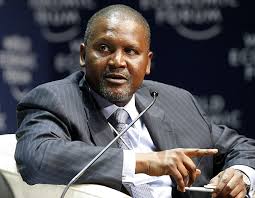
The current recession rocking the Nigerian economy has hit one of the biggest employers of labour in the country outside of the government as the Dangote Group, belonging to Africa’s richest man, Aliko Dangote, has fired 48 members of staff.
Our correspondents gathered that those sacked were made up of 36 expatriate and 12 Nigerian workers from the group’s headquarters and one of the subsidiaries, Dangote Cement Plc.
Though no official of the group was willing to speak on the matter on Sunday, one of our correspondents gathered from highly placed sources that the decision to sack the workers was not unconnected with the current high cost of running business in the country occasioned by the unavailability of foreign exchange and the unprecedented hike in the naira to dollar exchange rate.
It was further gathered that the huge amounts in foreign currencies being paid to the expatriate workers had become a burden on Dangote due to the steady depreciation in the value of the naira and the difficulties of raising enough dollars.
Consequently, the industrialist, according to sources, has decided to replace the expatriates with Nigerians, who have acquired the requisite experience on the job, as paying them in naira will be less problematic.
For the affected Nigerians, it was gathered that most of them had disciplinary issues, which made it easy for the group to do away with their services.
When contacted on Sunday, the Group Head, Corporate Communications, Dangote Group, Tony Chiejina, said he could not speak on the development.
However, in a letter signed by the President/Chief Executive Officer, Dangote Group, Aliko Dangote, dated Thursday, October 20, 2016,the firm stated that it was constrained to take the “tough” decision as economic factors had affected the cost of production.
The letter, which was titled: ‘Recent Retirement Exercise’, however, appreciated those affected for their contributions to the growth of the group.
The letter read in part, “This year has been a very challenging year for us as a business. The unavailability of foreign exchange coupled with an unprecedented hike in the exchange rate has resulted in increased costs across the organisation.
“This called for a proper review and adjustment of our costs across board to ensure efficiency and effectiveness in the deployment of our factors of production in a bid to eliminate redundancies that we know exist, which resulted in some tough decisions, which means losing staff, including some of our colleagues.
“On Friday, October 14, 2016, we began the process of staff cutbacks as it is imperative to review our human capital deployment for the required cutbacks that would ensure efficiency and eliminate redundancies in the allocation of human resources.
“This first phase of this exercise involved the cutback of 36 expatriate staff across the Dangote Cement Plc and Dangote Industries Limited, and 12 local staff members in Dangote Industries Limited.”
As an organisation with international operations, the group promised that it would continue to review and restructure its human capital deployment to ensure “optimal allocation of skill sets and size of the workforce each function requires.”
The group urged the workers to shun lateness, improper dressing and other unsavoury behaviours in the workplace.
Bloomberg had in its latest ‘Billionaire Index’ reported that Dangote had lost $5.4bn of his fortune this year due to the fall in the value of the naira and the decision of the Central Bank of Nigeria to ration dollars to stem huge capital outflows in the wake of Nigeria’s worst economic crisis.
Dangote had recently urged the Federal Government to sell off the Nigerian Liquefied Natural Gas Company and other dormant but huge capital-generating enterprises and reinvest the proceeds in the economy to bring the country out of the current economic recession before the end of the fourth quarter.
Dansa Foods Nigeria Limited, which claims to be a member of the Dangote Group, has reportedly been unable to pay its workers for the past six months.
The company is being run by Alhaji Sani Dangote, a brother of Aliko, who is the Executive Chairman, with Aliko’s shares embedded in the firm.
Multiple sources in the Dangote Group claimed that Dansa Foods was not part of the group but was an independent company owned and run by Aliko’s brother.
However, in a statement announcing its participation at the just concluded Lagos International Trade Fair, the group listed some of its subsidiaries as Dangote Sugar Refinery, Dangote Agrosacks, NASCON Allied Industries Plc (Dangote Salt), Dangote Rice Limited, Dangote Cement Plc and Dansa Foods Limited.
It was reported that the company, which produces Dansa Juice and other goods, had laid off more than half of the workforce following dwindling sales and high cost of production caused by high exchange rate of the naira.
It was gathered that the company had suspended the production of Dansa Juice and other products, and was only producing Mowa Bottle Water.
As a result, the workers have reportedly embarked on a strike to press home their demand.

Sunday, 23 October 2016

Sanusi, Saraki, Aregbesola proffer solutions to recession


’Femi Asu
As the nation continues to wallow in recession, stakeholders, including the Emir of Kano, Muhammadu Sanusi II, have highlighted the need to focus on addressing the issues that pushed the economy into the crisis.
Sanusi, alongside the Osun State Governor, Rauf Aregbesola; and the Senate President, Bukola Saraki, gave the advice, while listing the conditions necessary to exit recession and avoid a future chaos.
They spoke during The Point newspaper’s public presentation and first annual conference on economic regeneration in Lagos on Friday, according to a statement on Sunday.

Sanusi, who was the special guest of honour, blamed the current recession on decades of policy failure, which he said had been the bane of Nigeria’s economic development.
He said, “We have had decades of policy failure. The last decade was Africa’s miracle decade, because we moved from a continent that was known for hunger and war to a decade where we were seen as a land of opportunities and investments.
“Nigeria grew at seven per cent every year throughout that period as the economy doubled, and we became the biggest economy in Africa. But a lack of policy made us lose all proceeds.”
Sanusi, therefore, advised the Federal Government to take a decisive step on the type of economy it would want to run, adding that the time had come for the government to differentiate between reality and passion.
Aregbesola noted that a decline in the price of crude oil in the international market had always been the cause of the recession the country had fallen into at different periods.
He said the difference between the past recession and the current one was that the previous ones never lasted this long.
“The fundamental problem is that we can no longer fund our imports because our foreign earnings have progressively declined, while our taste for and dependence on foreign goods has continued to increase. This is what put pressure on the naira, making imported goods to become very expensive and it put the economy in a tailspin,” the governor said.
On his part, the Senate President said the time had come for the country to diversify, stressing that it was no longer fashionable to run a monolithic economy.
Saraki, who was represented at the event by the Chairman, Senate Committee on Banking and Finance, Senator Rafiu Ibrahim, said, “The Small and Medium Enterprises, not government, not big corporations, hold the key to solving our unemployment problems, raising the Gross Domestic Product, diversifying the economy and promoting production and manufacturing in Nigeria.”
He, however, said that the country had yet to fully harness its economic potential due to the absence of adequate and deliberate interventions that could support the SME development and growth.

CREDIT: Punch

Saturday, 22 October 2016

Bad Leaders caused Recession in Nigeria-Pat Utomi

pat-utomi

Nigeria’s renowned economist and financial expert, Professor Pat Utomi, has attributed the present economic recession to the “bad behaviour” of previous governments, Daily Post reports.
The renowned political economist noted that Nigerian leaders are lazy and many are in the position of authority but are not leaders.
He stated that every government appears to be worse than the one before it and that there is the dearth of leadership values among political elites.
Utomi said: “Nigeria inflicted recession on itself through the bad behaviour of previous governments. It was the result of an elite that is too lazy to restructure the economy. Our leaders are lazy and they always want the oil price to rise.”
He challenged the youth not to emulate the present crop of “mentally lazy elite that are not ready to build their country.”
“We are in dire need of leaders with a sense of service towards others and contribution to the Society. Nigeria is a paradox of progressive degeneration. Every government is worse that the one before it because we have not refused to learn,” he said.
Utomi, had earlier said that Lagos state is a crucial catalyst if Nigeria’s economy is to witness a turn around for the better.
The former presidential candidate said there were a lot of lessons to be learnt from the Lagos economy, which according to him, is largely driven by it’s huge investment in infrastructure, vibrant tax collection strategy and an enabling environment for businesses to thrive with less dependence on oil revenue.